

Services
Services
Preclinical Acute Pain Testing
Tail Flick Test for Preclinical Acute Pain Studies
The Tail Flick (TF) Test is a widely recognized method for assessing acute pain sensitivity and nociceptive responses in restrained animals, primarily focusing on spinal reflexes. In this test, an infrared heat source is directed at the tail of a mouse, prompting a defensive tail flick reaction. The latency to flick the tail away from the heat is meticulously recorded, providing a quantifiable measurement that helps establish pain thresholds. To ensure animal safety and prevent tissue damage, the exposure to the heat source is strictly limited to a maximum duration of 10 seconds. This test is instrumental in evaluating the effectiveness of potential analgesic interventions.

Time course for the effects of acute injections of morphine (5 mg/kg; sc) in the tail flick test in CD1 mice.
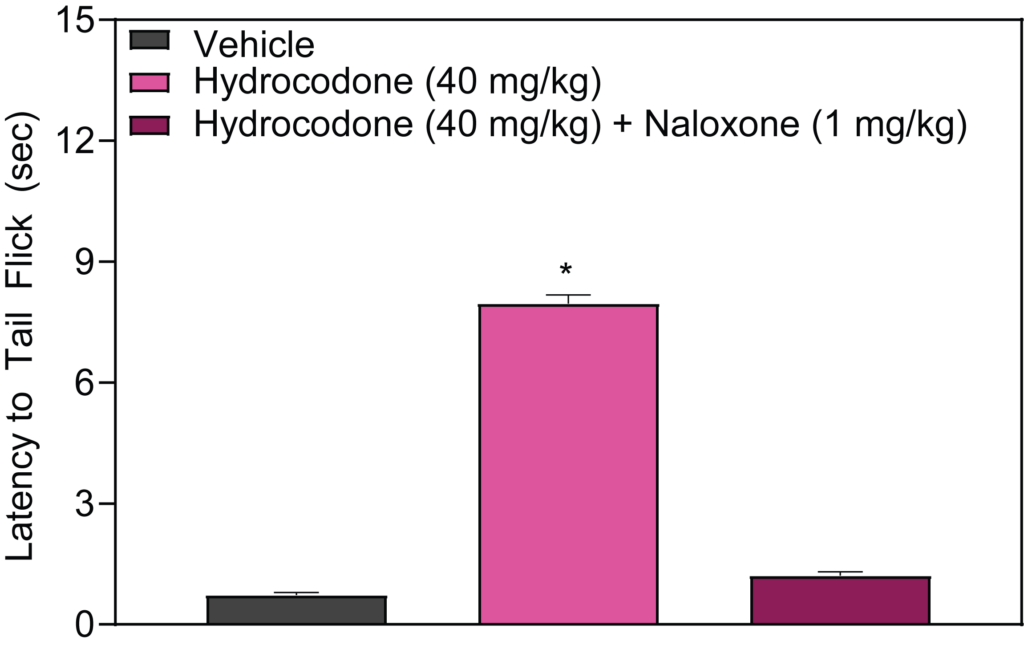
Oral administration of hydrocodone increases the latency to tail flick in mice. Naloxone reverses this effect.
Hot Plate Test for Preclinical Acute Pain Studies
In this test, animals are placed on a heated surface, pre-set to a specific temperature (52°C using the Ugo Basile apparatus). Pain thresholds are measured by observing behaviors such as paw licking, biting, or escape attempts (jumps). The latency time to the animal’s first reaction is meticulously recorded, providing valuable data for your study. To ensure the welfare of the animals and prevent tissue damage, the test period is strictly limited to a maximum of 60 seconds.
At PsychoGenics, animal welfare is paramount. By limiting the test period to prevent tissue damage, we ensure the well-being of the animals while obtaining accurate data for your study.
Hot Plate Test in Rats
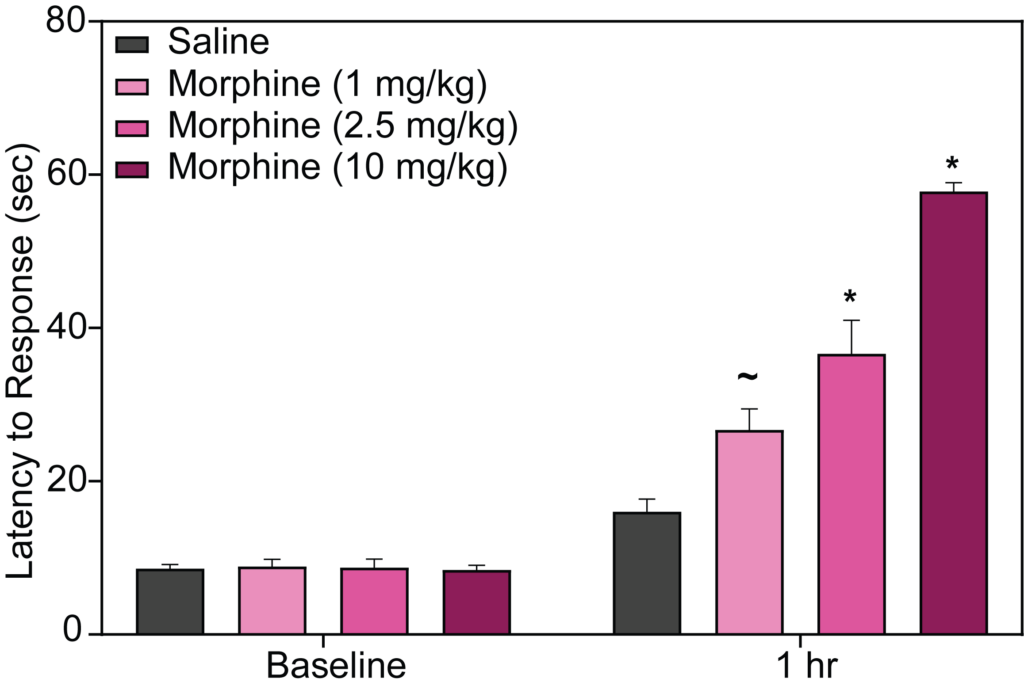
Dose response for the effects of acute subcutaneous injection of morphine on the latency first response in male Sprague Dawley rats.
Hot Plate Test in Mice
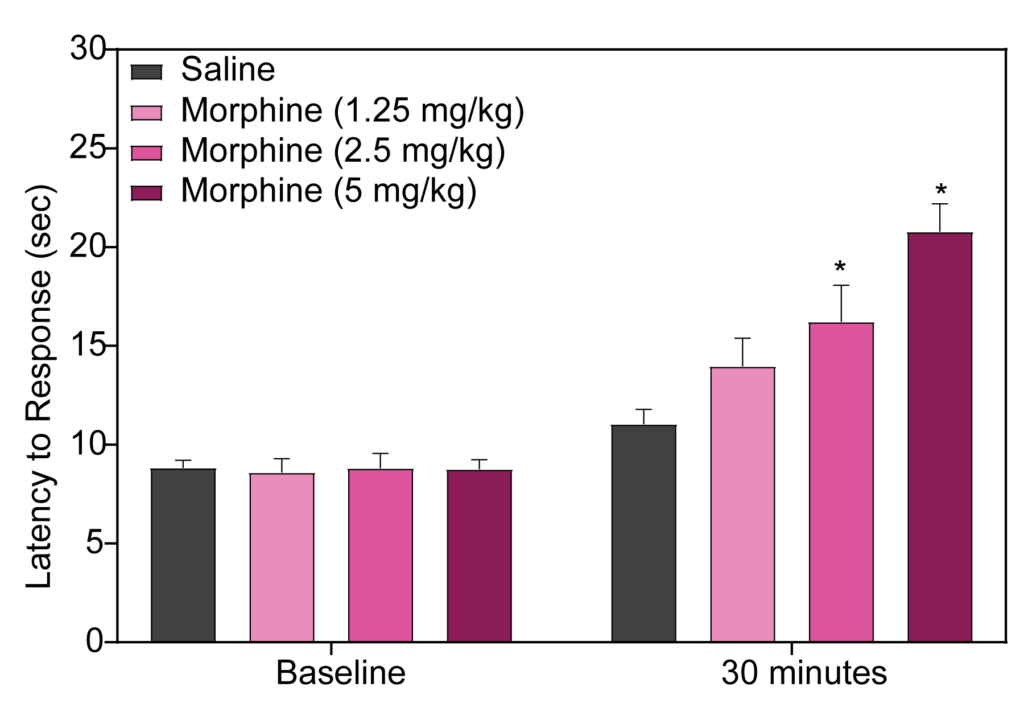
Dose response for the effects of acute subcutaneous injection of morphine on the latency first response in male CD1 mice.
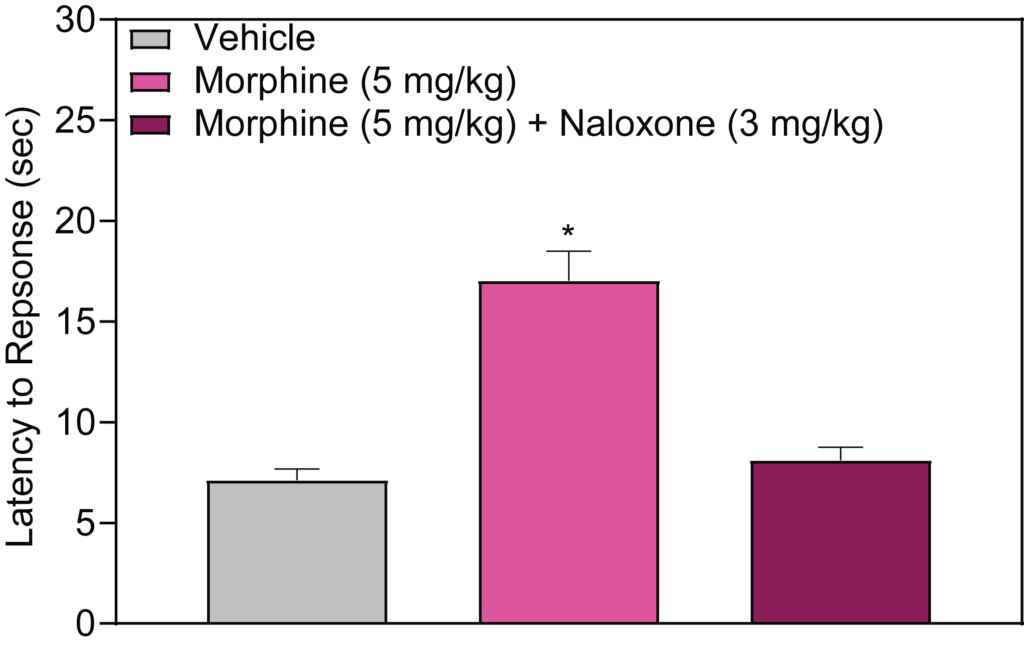
Acute injection of Morphine (5 mg/kg; sc) increases the latency to paw lift/lick in the hot plate test. Naloxone reverses this effect.