The 6-Hydroxydopamine (6-OHDA) lesion model of Parkinson’s Disease employs unilateral striatal stereotaxic injection of 6-OHDA, a neurotoxin, into the brain to selectively destroy dopaminergic neurons. This process replicates features of Parkinson’s Disease, such as the gradual depletion of these neurons, which leads to motor deficits. Rat models using 6-OHDA are robust, as the neurotoxin is well tolerated. However, 6-OHDA lesion in mice is more challenging due to higher sensitivity to the toxin resulting in increased mortality rate.
At PsychoGenics, we offer a robust mouse model of 6-OHDA that shows motor deficits and loss of dopaminergic neurons for screening potential therapies for Parkinson’s Disease.
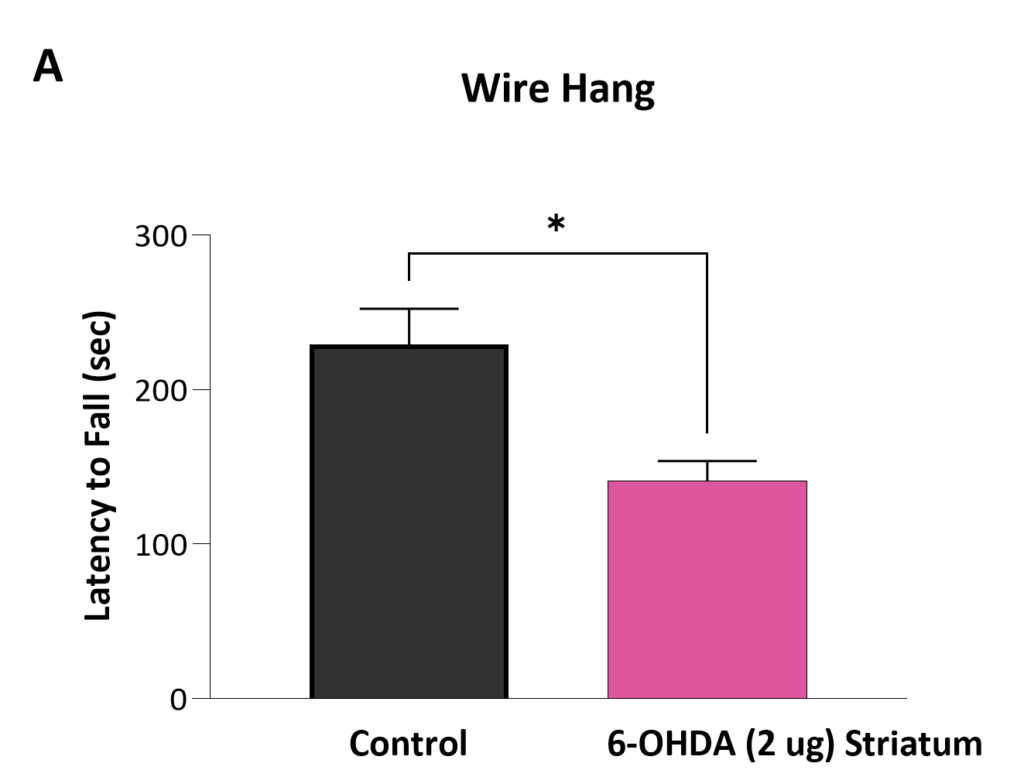
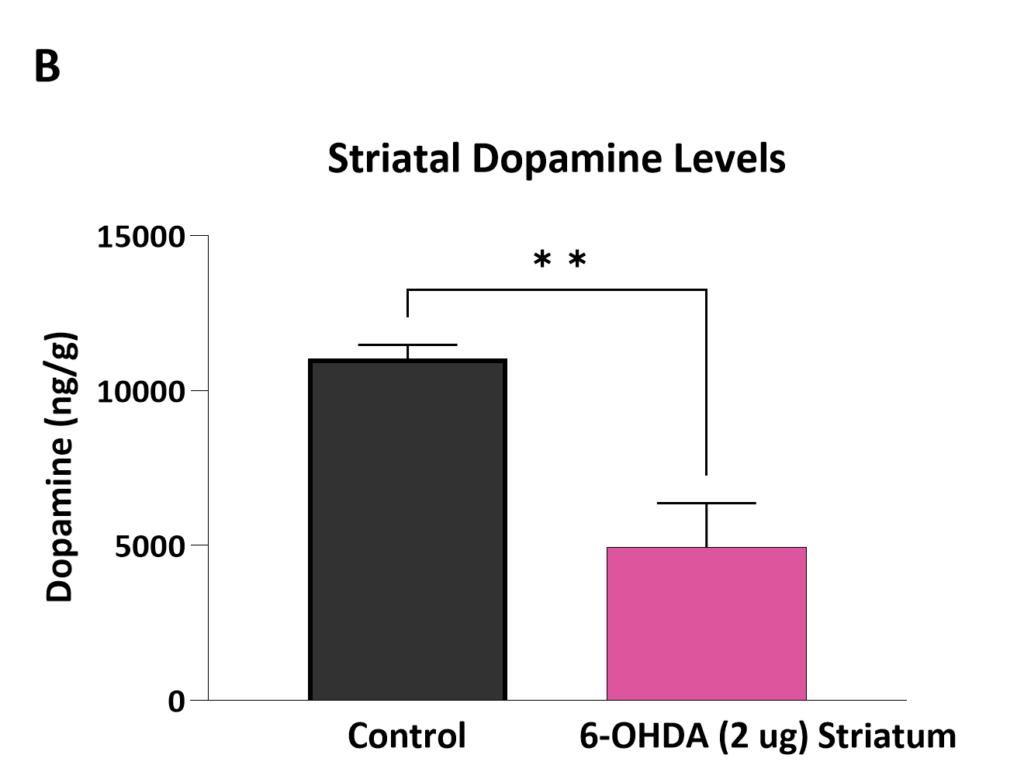
Female C57Bl/6J mice underwent unilateral striatal 6-OHDA (2ug) lesion at 8 weeks of age. Four weeks following lesion, 6-OH treated mice showed a deficit in wire hang test performance as seen in the decreased latency to fall (A). Additionally, lesioned mice showed partial dopamine depletion (55% reduction) in striatum as measured by UPLC/MS (B).