Controlled Cortical Impact Model in Sprague Dawley Rats
The Controlled Cortical Impact (CCI) model is a widely used experimental model for studying traumatic brain injury (TBI). This model produces a precise and reproducible cortical lesion with well-characterized pathological and behavioral outcomes. CCI replicates several key features of human TBI, including focal tissue loss, neuroinflammation, and deficits in motor coordination and cognition. Because injury parameters such as impact depth, velocity, and dwell time can be tightly controlled, the CCI model enables the generation of consistent injuries and supports reliable evaluation of therapeutic interventions. As a result, CCI is a valuable platform for investigating mechanisms of brain injury and recovery, as well as for advancing the development of neuroprotective and neurorestorative treatments.
Balance and Locomotor Function
Rats subjected to CCI show deficits in balance and locomotor performance on the Balance Beam, during the first week after injury. CCI rats are unable to maintain their balance and fall quicker compared to sham rats. Forelimb asymmetry can be evaluated using the Cylinder Test, which measures spontaneous forelimb use during vertical exploration. Following CCI, rats show increased reliance on the ipsilateral (unimpaired) forelimb. Importantly, this assay measures asymmetrical limb use rather than the absolute ability to move the affected paw, reflecting behavioral preference rather than complete loss of function.
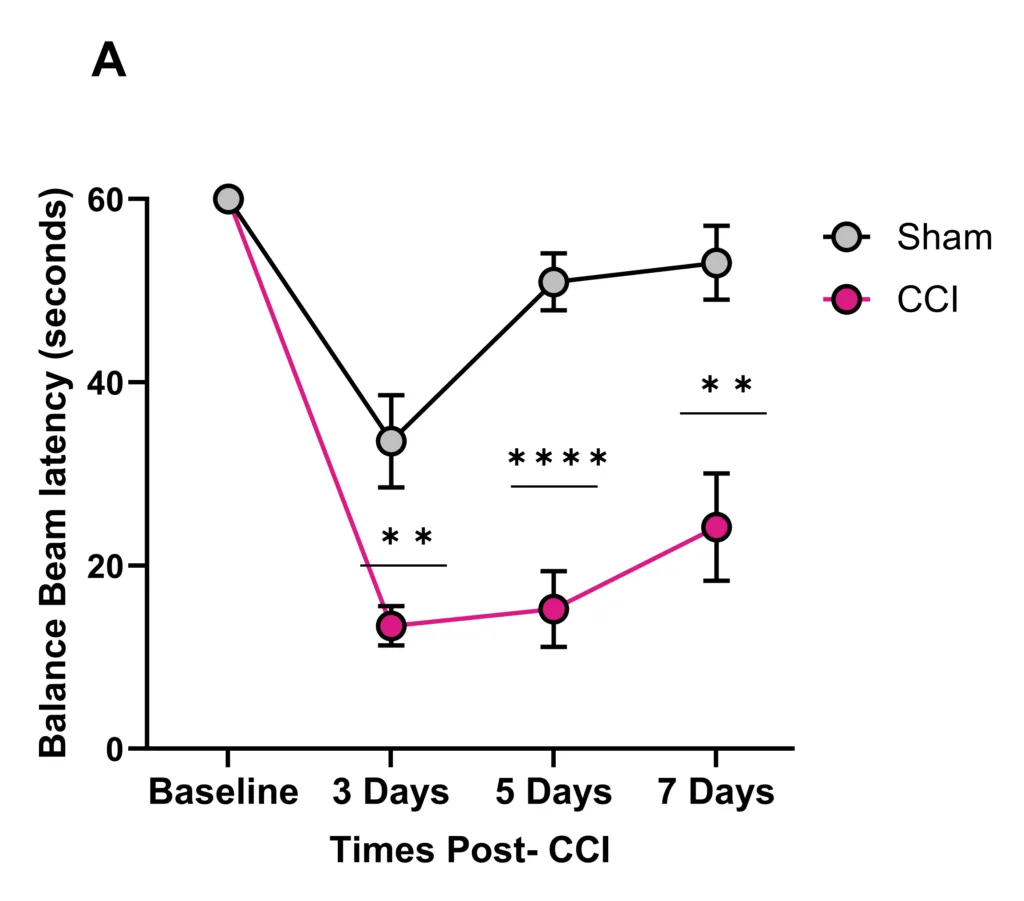
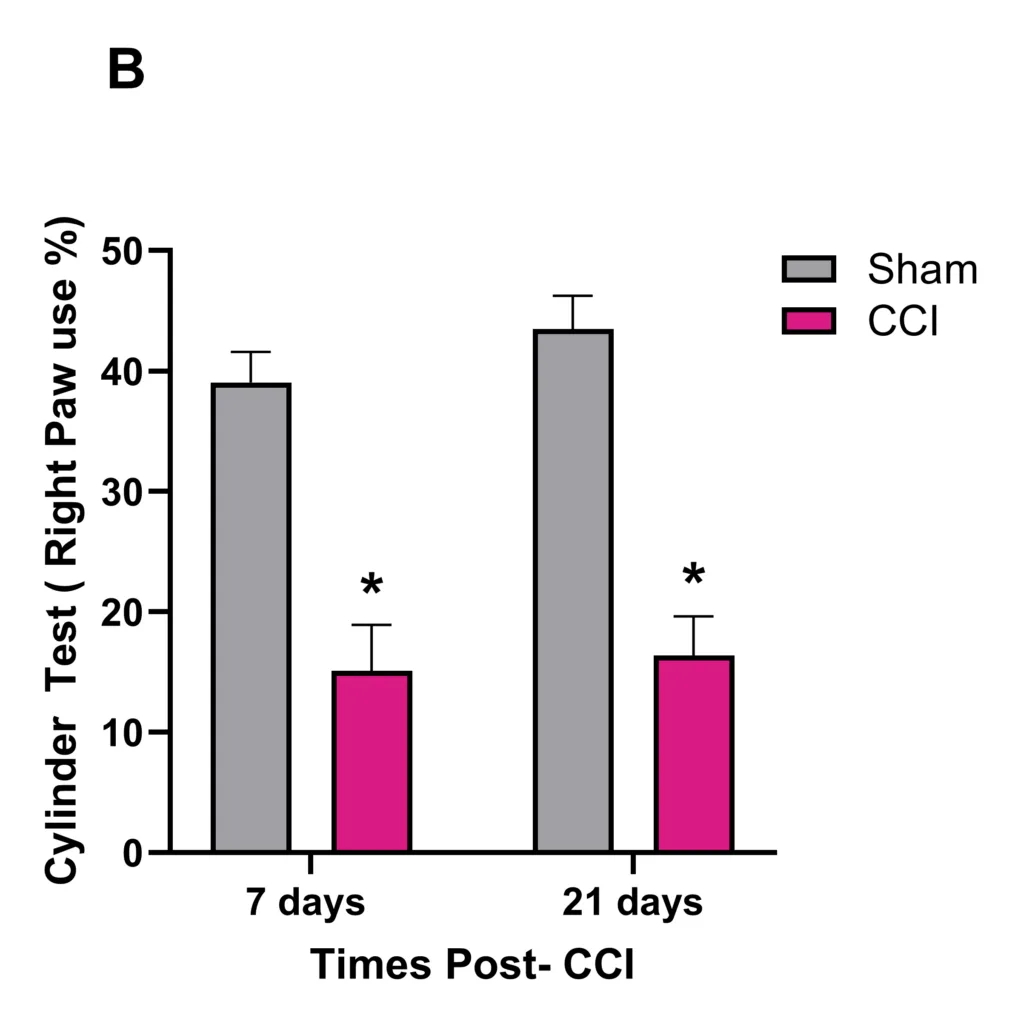
Figure 1. Assessment of balance and sensorimotor asymmetry in the CCI model. (A) Beam Balance Test: CCI rats show impaired balance compared with sham animals during the first week following injury. (B) Cylinder Test: Rats with unilateral CCI preferentially use the ipsilateral forelimb during exploration, indicating forelimb use asymmetry.
Cognitive Function
Cognitive deficits following TBI can be evaluated using the Morris Water Maze (MWM) test, a widely used spatial learning and memory test. CCI rats show deficits during the acquisition phase with increased latency and longer swim distances to reach a hidden platform compared to sham animals. Similarly, CCI rats show deficits in memory retention during the probe trial, where they spend less time, and have fewer entries in the target quadrant compared to sham rats.
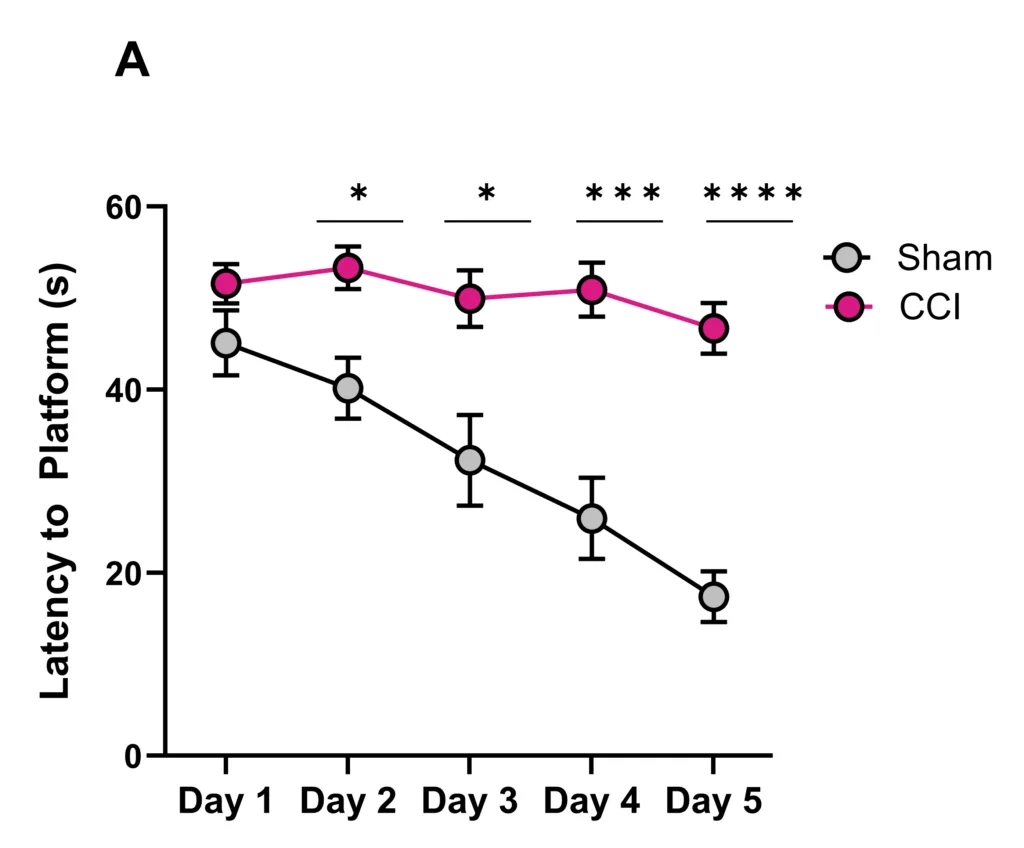
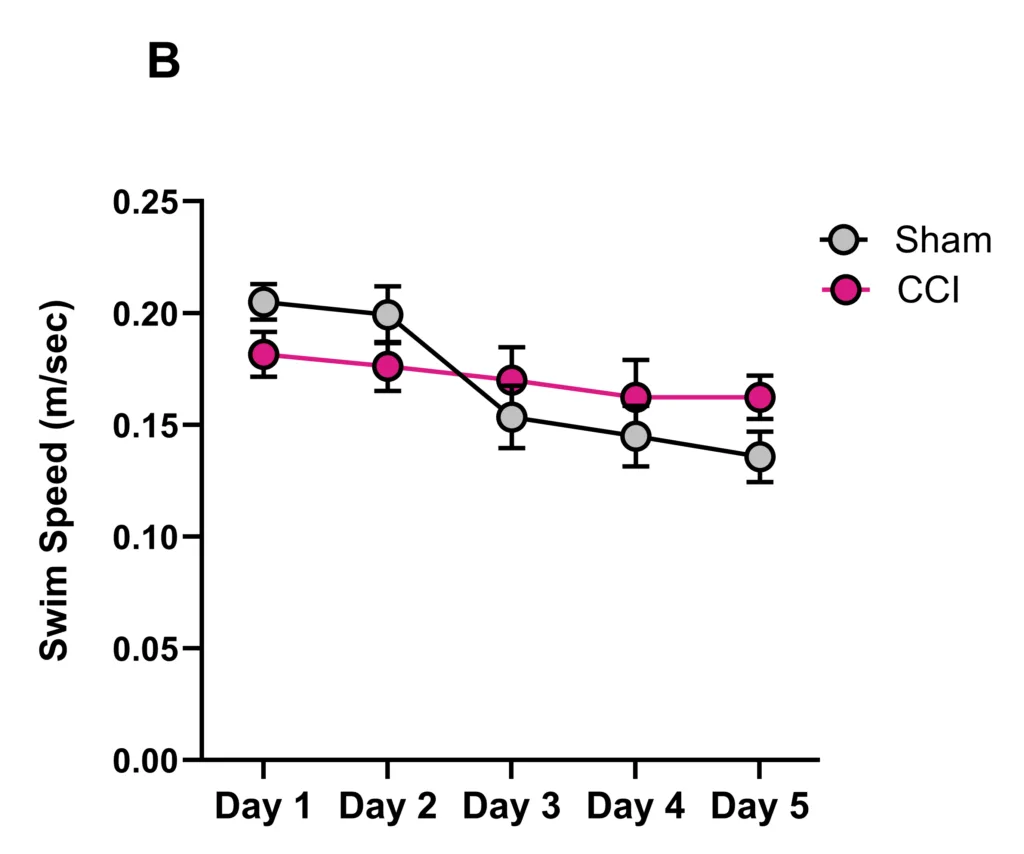
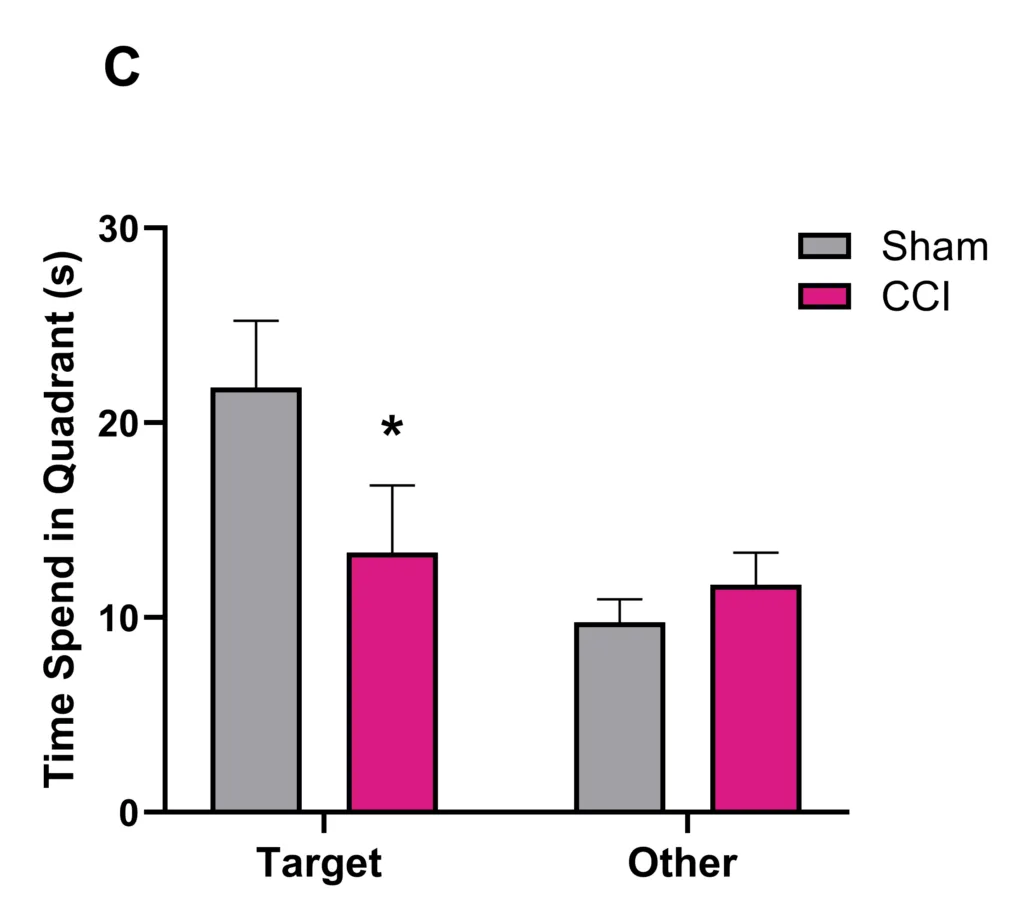
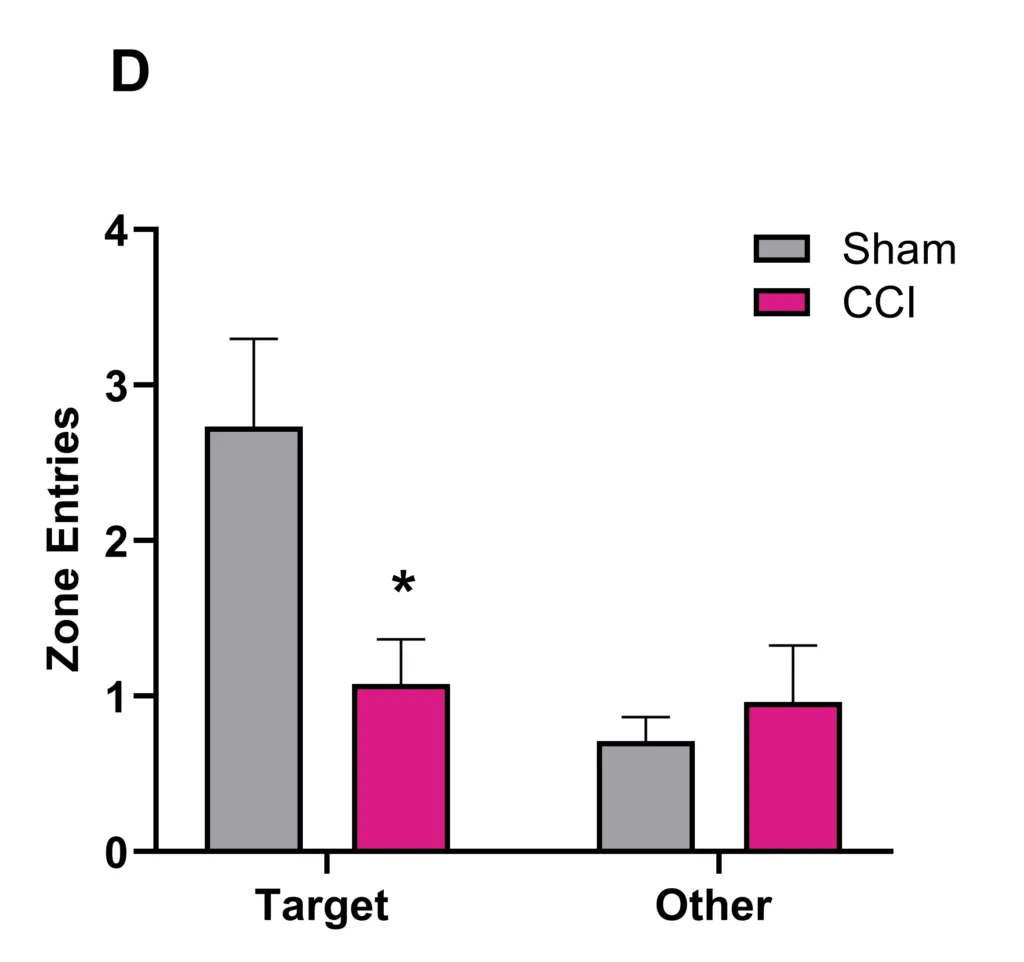
Figure 2. Assessment of cognitive function in the MWM test. (A)CCI rats show increased latency to reach the platform during the acquisition phase compared to Sham rats. (B) Swim speed is comparable between CCI and sham rats, indicating similar locomotor and swimming ability. (C–D) Probe trial: CCI rats show reduced target quadrant preference (less time spent and less entries in target quadrant), indicating impaired spatial memory following injury.