Acutely prepared ex vivo brain slices preserve tissue cytoarchitecture and signaling. To test therapeutics with potential anti-epileptic modes of action, epileptiform activity can be induced in ex vivo brain slices. This approach offers the advantage of bypassing the blood-brain barrier, allowing earlier testing of therapeutics on endogenously expressed targets in the drug development cycle.
Anti-epileptic drug treatment depresses the
frequency of spontaneous epileptiform events
in ex vivo brain slices in a reversible manner

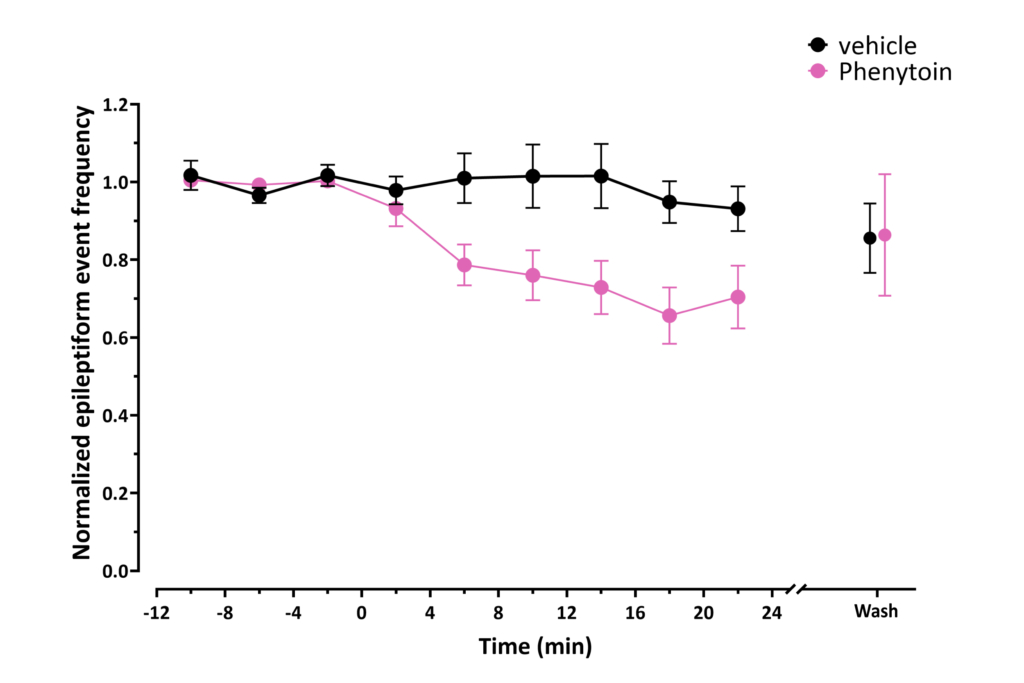
The reference anti-epileptic drug phenytoin depresses epileptiform activity in mouse ex vivo hippocampal slices. Sustained spontaneous epileptiform activity was induced using modified ACSF (decreased concentrations of extracellular Ca2+ and Mg2+ and elevated concentration of extracellular K+). Illustrated in this time course (with corresponding electrophysiological traces, top), bath perfusion of 100 µM phenytoin-sodium (represented by the black bar) rapidly (within ~20 min) and reversibly depressed spontaneous epileptiform activity in hippocampal CA1. The drug-mediated suppression of epileptiform activity could be washed out (washout time point was ~ 60 min following cessation of phenytoin application to perfusing bath).
Preservation of synaptic transmission is a critical
characteristic of effective anti-epileptic treatment
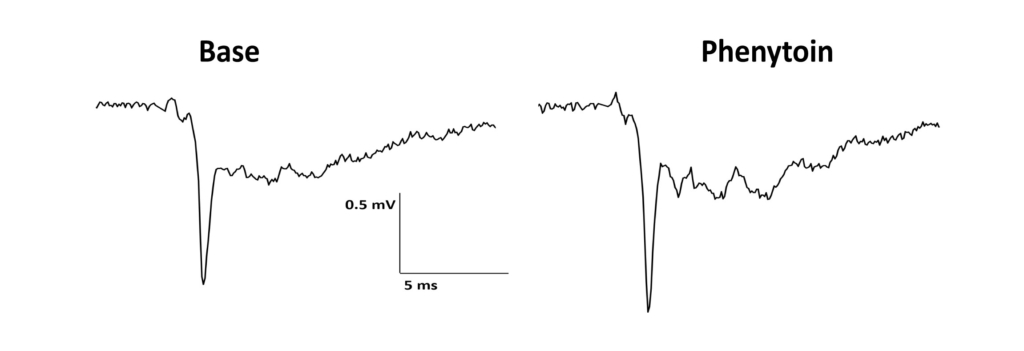
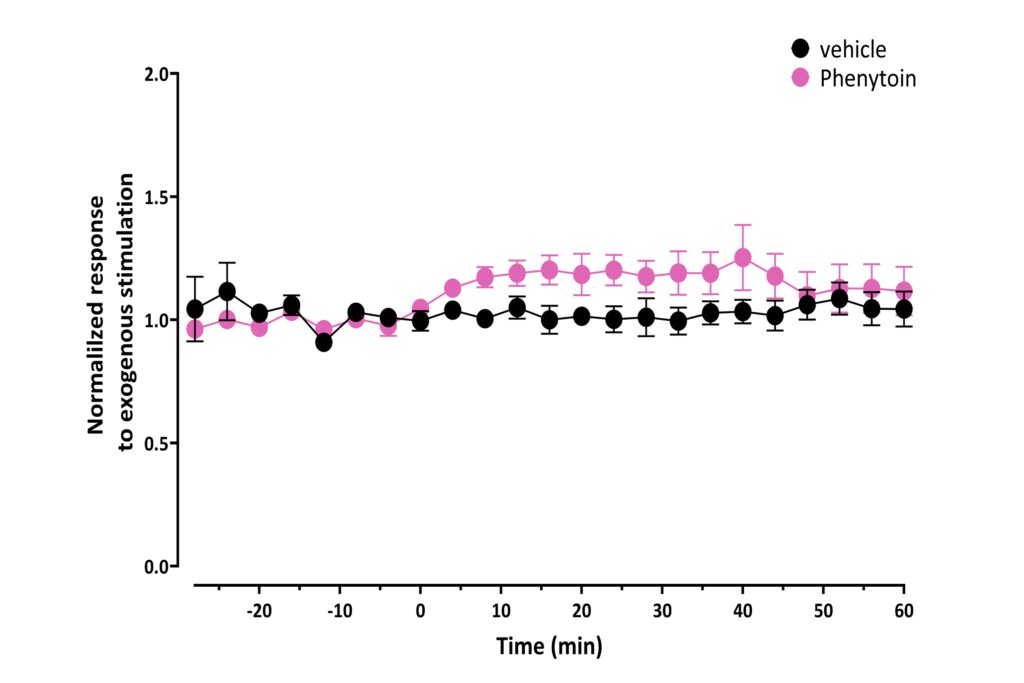
Phenytoin treatment preserves electrical signaling underlying basal synaptic transmission. While phenytoin is effective in depressing epileptiform activity, simultaneous observation of neurotransmission – through stimulus-evoked responses – demonstrates that this drug does not broadly suppress electrophysiological signaling, a feature desirable in anti-epileptic therapeutic development. The electrophysiological traces above (top) illustrate an example response to exogenous electrical stimulation of a mouse hippocampal brain slice in the CA1 region proximal to the principal cell layer. The group averaged data in the plot (bottom) shows that phenytoin does not depress this form of neuronal signaling throughout its application.